- Guest
- Travel
- 0 Comments
Tulip Season in the Netherlands: A Local’s Guide
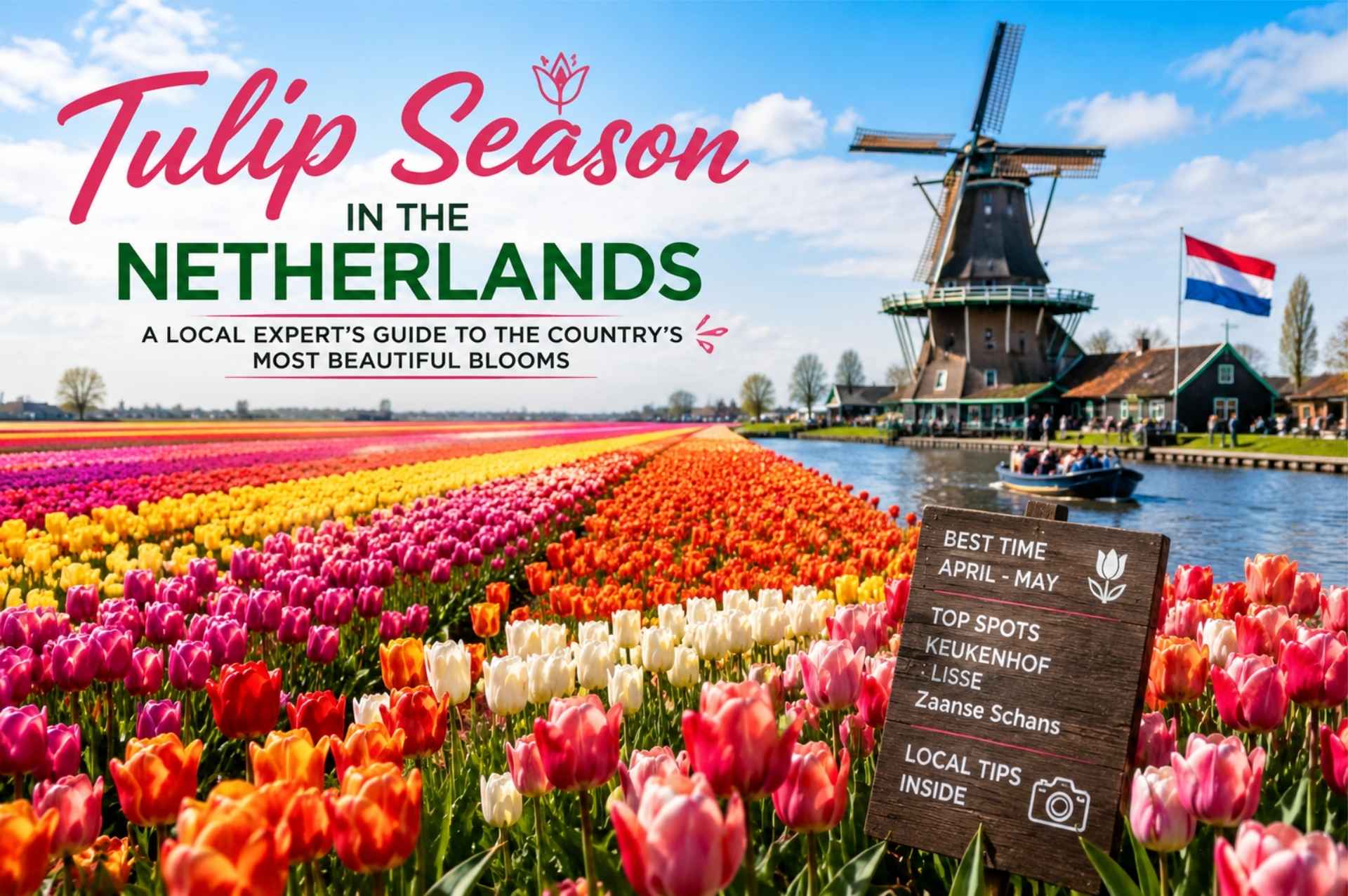
Every spring, the Netherlands transforms into a landscape that looks almost unreal.
Long, straight rows of color stretch toward the horizon. For a few short weeks, the whole country seems to focus on one flower.
For visitors planning a bloom trip, it helps to know how the tulip season really works. It shows which fields open first. It also shows which Dutch tulip garden draws the biggest crowds.
It also explains how locals enjoy the season without the chaos. This can turn a rushed photo stop into a trip that feels postcard-perfect.
This guide explains the experience like a longtime bloom chaser talking to a friend. It covers what Dutch tulip fields are like up close. It explains why the timing changes each year. It also shows how to see Holland’s tulips without spending all day in tour bus traffic.
Meet the Expert: A Life Chasing the Bloom
Understanding tulip season isn’t just about checking a calendar.
Growers, photographers, and local guides spend every spring in the fields.
They develop a feel for the bloom that no app can match.
They know which fields color up first based on soil type.
They know which roads fill with tourists by 10 am.
They also know which quiet corners of the Bollenstreek still feel undiscovered. That kind of local knowledge sets a simple sightseeing checklist apart from a real guide.
It helps you find the right tulip garden in the Netherlands.
It also helps you go at the right time.
The Tulip’s Untold Origin Story
From a Himalayan Wildflower to a Dutch Icon
It surprises most visitors to learn that the tulip isn’t originally Dutch at all. The flower’s ancestors grew wild in Central Asia’s mountains near the Himalayas. They were small, hardy red blooms that survived harsh, rocky terrain. It took centuries of trade and cultivation before the tulip ever touched Dutch soil.
How Turkey Turned a Wildflower into an Obsession
Traders carried tulip bulbs from Central Asia to the Ottoman Empire. There, growers shaped the plain wildflower into something more elaborate. They grew taller stems, richer colors, and more dramatic petals.
By the late 1500s, the flower reached the Netherlands. Traders, growers, and gardeners saw potential in the plain-looking bulb. Within a few decades, that unassuming bulb had become one of the most sought-after commodities in Europe.
When the Bollenstreek Comes Alive: Understanding Tulip Season
The Real Bloom Window
Tulip season in the Netherlands generally runs from late March through mid-May, but the “best” week shifts constantly. Fields usually reach peak color in late April.
A warm February can bring it earlier.
A cold, wet March can delay it for weeks. Anyone planning around Holland tulips should think of a moving window rather than a fixed date.
Why Timing Shifts Every Year — and How to Track It
Because bloom timing depends on temperature and rainfall, local growers watch weather patterns closely. They do not rely on last year’s dates. Regional tourism boards and bulb growers’ groups share real-time bloom updates during the season.
Check these closer to your travel dates. It is more reliable than planning six months.
Do not rely on a fixed week.
The Bulb Region: Where the Magic Actually Happens
Haarlem to Leiden — the Heart of the Bollenstreek
The most famous tulip fields in the Netherlands are in the Bollenstreek.
This farmland strip runs between Haarlem and Leiden and angles toward the North Sea coast. This is where the classic image of Dutch tulip fields comes from. You see wide bands of red, yellow, pink, and purple. They lie in perfect rows under a flat, open sky.
Beyond the Postcard Route: Lesser-Known Fields Locals Prefer
While the Bollenstreek draws the biggest crowds, growers and locals often guide travelers to the Noordoostpolder.
It is a working farm region north of Amsterdam, with tulip fields across a quieter, less-visited landscape. Because these are working farms, not gardens made for visitors, the atmosphere feels rawer and less curated. You see rows of flowers as far as the eye can see. There are also far fewer people standing in front of them.
Keukenhof, Through a Local’s Eyes
What Makes It Worth the Crowds
No talk about a tulip garden in the Netherlands is complete without Keukenhof.
It is the world’s largest flower garden.
Each spring, several million bulbs bloom across curated, themed sections. Unlike open farmland, Keukenhof is made for visitors. It has walking paths, sculptures, and windmills in the landscape. It offers a fully immersive bloom, not a drive-by view.
The Best Time of Day to Go
Arriving early, ideally within the first hour of opening, makes a significant difference. Tour buses tend to arrive mid-morning, so the earliest visitors get wide, empty paths and softer light for photos before the garden fills in.
A Living Museum: Inside the Hortus Bulborum
Tucked away in the town of Limmen is a smaller, quieter tulip garden. It is a historic bulb collection. It preserves thousands of heritage varieties. Some date back centuries.
For growers and horticulturists, this collection is like a living archive.
It is a place where rare tulip varieties are kept alive and studied, not sold. It’s a reminder that behind the commercial spectacle of modern tulip fields in the Netherlands, there’s a much older, more delicate history still growing in the ground.
How to Experience the Tulips Like a Local
Slow Road Trips Through the Fields
Renting a car and driving the back roads of the Bollenstreek slowly is one of the best ways to see the bloom.
Stop wherever the colors look best. Locals rarely follow a fixed route; they follow the fields.
Cycling the Tulip Routes
The Netherlands’ flat terrain and extensive bike paths make cycling one of the most natural ways to move through tulip country. Signposted cycling routes wind directly through working fields, letting riders get far closer to the flowers than a car ever could.
Pick-Your-Own Bulb Farms Worth the Detour
Several farms in the bulb region let visitors walk into marked rows and pick tulips for a small fee. It is a hands-on option instead of just taking photos from the road. Families often enjoy it.
Beyond the Fields: Tulip Culture in Everyday Dutch Life
The Floating Flower Market
In Amsterdam, the Bloemenmarkt is a floating flower market on the Singel canal.
It has operated since the 1800s.
It keeps tulip culture alive outside peak bloom season.
It sells cut flowers and export-approved bulbs to take home.
How the Auction Houses Reveal the Scale of the Trade
Flower auction houses near Amsterdam move tens of millions of stems and bulbs each year.
This scale shows how central the tulip trade still is to the Dutch economy, centuries later.
Bringing the Bloom Home
What You Can Legally Take Back
Not every tulip bulb is approved for export to every country. Travelers who want to bring bulbs home should buy only from vendors. Choose certified, export-ready stock with clear labels for international travel.
Choosing Bulbs That Actually Survive the Trip
Firm, dry, disease-free bulbs travel best. Buying from a reputable grower near the tulip fields, not a roadside stand, gives you better odds.
The bulb is more likely to bloom again once you plant it back home.
Seen this way, tulip season in the Netherlands is not one single event.
It is a slow, weather-driven wave that locals track and chase each year.
Understanding this rhythm turns a quick stop at a tulip garden into a trip.
It becomes a trip built around the bloom itself.
- Tags :
- Breaking
Recent Comments
- No comments yet. Be the first!